


Hardwood Floor Repair in Kansas City
Damaged, stained, loose, or missing boards do not always mean you need an entirely new floor. We repair localized hardwood damage, blend new boards into existing floors, and give you a straightforward recommendation when refinishing or replacement makes more sense.
A damaged area does not always mean a new floor
A repair may be practical when the damage is limited and the surrounding hardwood remains usable. We assess the affected boards, the adjacent floor, and any accessible subfloor before recommending the work.
The important question is not just whether a board can be replaced. It is how the repair will fit the existing floor and whether additional sanding and finishing are needed to blend the area.
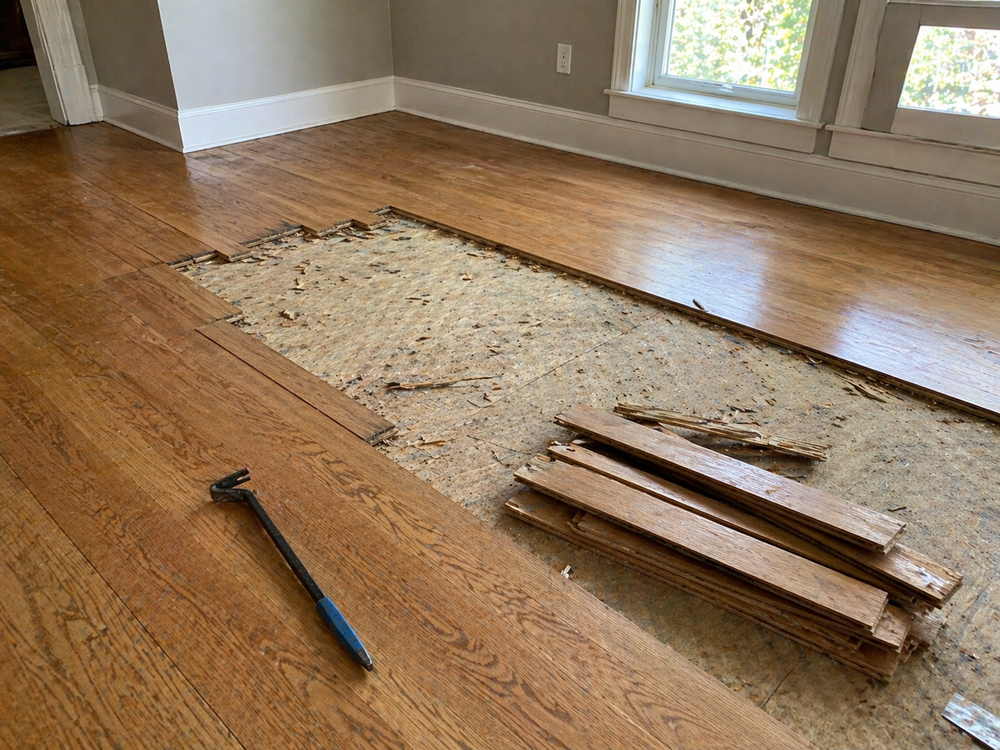
Common hardwood floor repairs
Scratches, gouges, and broken boards
A mark confined to the finish is different from damage that reaches the wood. Deeper scratches may require sanding a wider area, while a badly gouged, split, or missing board may need replacement. We explain the likely visibility of a spot repair before recommending it.
Pet stains and dark spots
Discoloration can extend deeper than sanding can safely remove. Replacing affected boards may be more practical than trying to hide a deep stain. The extent of the damage and availability of matching wood affect the scope.
Water-damaged flooring
Staining, cupping, swelling, or separation calls for an assessment of the floor and moisture conditions. The source of moisture needs to be addressed before repair work proceeds. Replacing boards alone does not solve an active leak or ongoing moisture problem.
Gaps, loose boards, and squeaks
Some movement can be addressed by securing or replacing boards. Recurring gaps or squeaks may involve the installation, subfloor, or moisture conditions. We evaluate the cause rather than assuming every gap should simply be filled.
Weave-ins after remodeling
Removing a wall, changing a doorway, or moving cabinetry can leave a break in the floor. Where suitable material is available, new boards can be woven into the existing layout instead of ending the repair in a straight patch.
Matching the surrounding floor
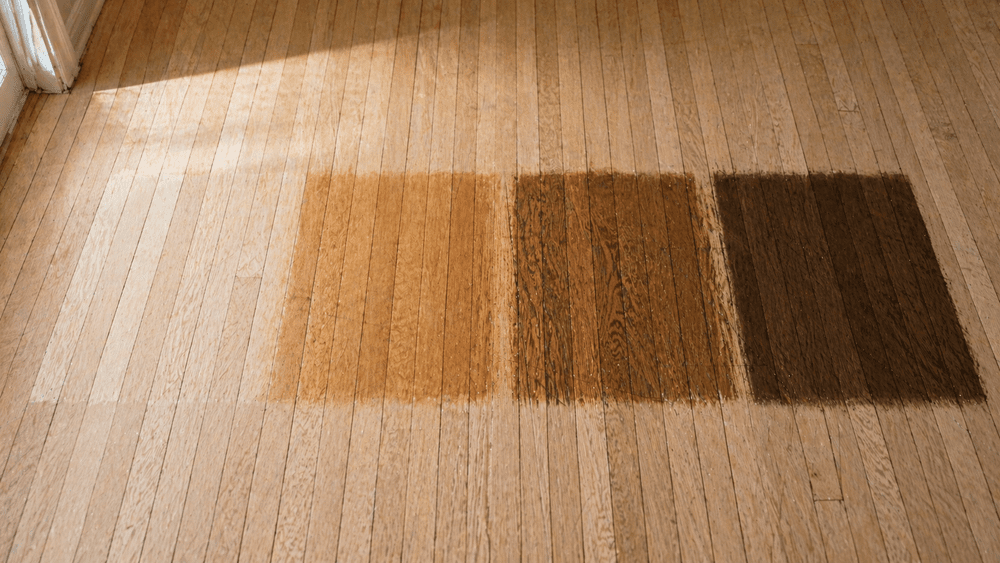
Species, board width, thickness, grain, and direction all matter. New wood can still differ from aged flooring after staining. A wider refinish may improve consistency, but an invisible match should not be assumed.
Plan the repair and the finish together
Installing replacement boards is one part of the job. Decide how much surrounding flooring will be sanded, stained, or recoated before work begins. This helps set realistic expectations for both color and sheen.

Repair, refinish, or replace?
Localized repair
Consider this when a limited area is damaged and the surrounding floor is sound. The estimate should explain the replacement material and included finishing work.
Repair plus refinishing
Consider this when boards need replacement and the surrounding floor also has widespread wear or needs a color change.
Explore hardwood refinishingLarger replacement
Consider this when damage is extensive, the underlying floor has failed, or a practical repair cannot be achieved with suitable material.
Explore hardwood installationIf only the protective finish is worn, a screen and recoat may be another option. It does not replace damaged boards or remove deep scratches.
What to expect from a hardwood repair
-
Inspect the floor
Assess the damaged area, surrounding boards, moisture conditions, and subfloor where accessible.
-
Explain the options
Discuss localized repair, repair with refinishing, or replacement, including what can realistically be matched.
-
Define the written scope
Identify the repair area and any included sanding, staining, finishing, trim, or transition work.
-
Complete the repair
Remove affected material, install replacement boards, and complete the preparation and finishing included in the estimate.
-
Review the result and care requirements
Walk through the completed work and explain any access restrictions, finish cure times, and ongoing care requirements.
Show us the damage and the surrounding floor
Send a close-up and a wider room photo. Tell us when the damage appeared, whether moisture is still present, and whether you have leftover flooring available. That information helps us prepare for the assessment.

Hardwood repair and restoration reviews
Hardwood worth saving
Repairs and restoration require an honest read on what can be blended, what should be replaced, and when a wider refinish will produce the better result.
“What really stood out was when they uncovered Brazilian cherry wood in one of the rooms and expertly restored it to its natural color and variation. It looks absolutely stunning. The floors are blended beautifully throughout my home.”
“My business had a flooring emergency that needed to be handled ASAP. Kevin asked about my situation, timeline, and budget, explained their process, then delivered cost-effective results ahead of deadline. I definitely recommend them to anyone with flooring needs.”
What affects hardwood floor repair cost?
The damaged area is only part of the estimate. Sourcing suitable boards, removing affected material, preparing the surface underneath and blending the finish all affect the work involved.
Identify two separate areas
First, identify the boards that need repair or replacement. Then identify how much surrounding flooring needs sanding and finishing.
A small board repair can require a larger finishing area to avoid an obvious change in color or sheen. The estimate should make both boundaries clear.
Confirm what the estimate includes
- Replacement wood and any lacing into existing boards.
- Removal, disposal and accessible subfloor preparation.
- The area being sanded, stained and finished.
- Trim, vents or transitions affected by the repair.
- How hidden damage or additional work will be handled.
Have leftover boards or product information?
Keep them for the assessment. A product label, spare plank or original flooring invoice can help identify a prefinished or engineered floor. Availability, board construction and the condition of the existing finish affect the repair options.
For water damage, tell us what caused it and whether the source has been corrected. Drying and moisture conditions need to be assessed before the repair schedule is set.
Wondering whether damaged boards can be saved? Our hardwood repair and board replacement guide explains the options for pet stains, water damage and blending repairs.
For questions about refinishing one room, matching wood or choosing a finish, read our hardwood flooring FAQs.
Request a hardwood repair estimateReady to talk about your floors?
Call for a free estimate or send us a few details below. We’ll get back to you within 24 hours.