

Fortress Floors KC · Homeowner answers
Hardwood flooring FAQs
Find out what your existing wood can become, what repairs involve and how to plan around sanding and finishing.
Refinish, repair or replace
Can my hardwood be refinished instead of replaced?
Often, if there is enough usable wood and the floor is sound. Remaining thickness, earlier sanding, damage and moisture conditions matter more than how worn the finish looks.
What is the difference between refinishing and a screen and recoat?
Refinishing sands back to the wood and allows a new color. A screen and recoat renews a compatible existing finish. It will not remove deep damage or change the stain color.
Will sanding remove black pet stains or water stains?
Not always. Deep stains can reach below the wood that can safely be sanded away. Some boards may need replacement. Discuss what is likely to remain before approving the work.
Can you restore hardwood that has been under carpet?
It may be a good candidate. First check the wood, fastening damage, stains and any missing areas. Removing carpet can reveal repair needs that were impossible to see beforehand.
Can engineered hardwood be refinished?
Some can, but the usable real-wood surface and construction must be checked. A thin wear layer or previous sanding may rule out another full sanding. Engineered wood is not the same material as LVP or laminate.
Can you refinish one room instead of the whole house?
Yes, when a sensible stopping point and finish plan are available. Adjacent rooms may still differ in color or sheen. Agree on the boundary and expected match rather than assuming the transition will disappear.
Will refinishing fix cupped boards, gaps or squeaks?
Sanding does not fix an active moisture source or loose structure underneath. Cupping needs moisture assessment first. Gaps and squeaks need their own diagnosis before they are included in a cosmetic refinishing plan.
Color, finish and matching
Can you make an orange or dark floor look lighter?
Often, sanding and a different finish system can change the look substantially. Wood species, old stains and the sealer affect the result. Approve samples on the floor rather than choosing from a phone photo alone.
Can I see stain samples in my home?
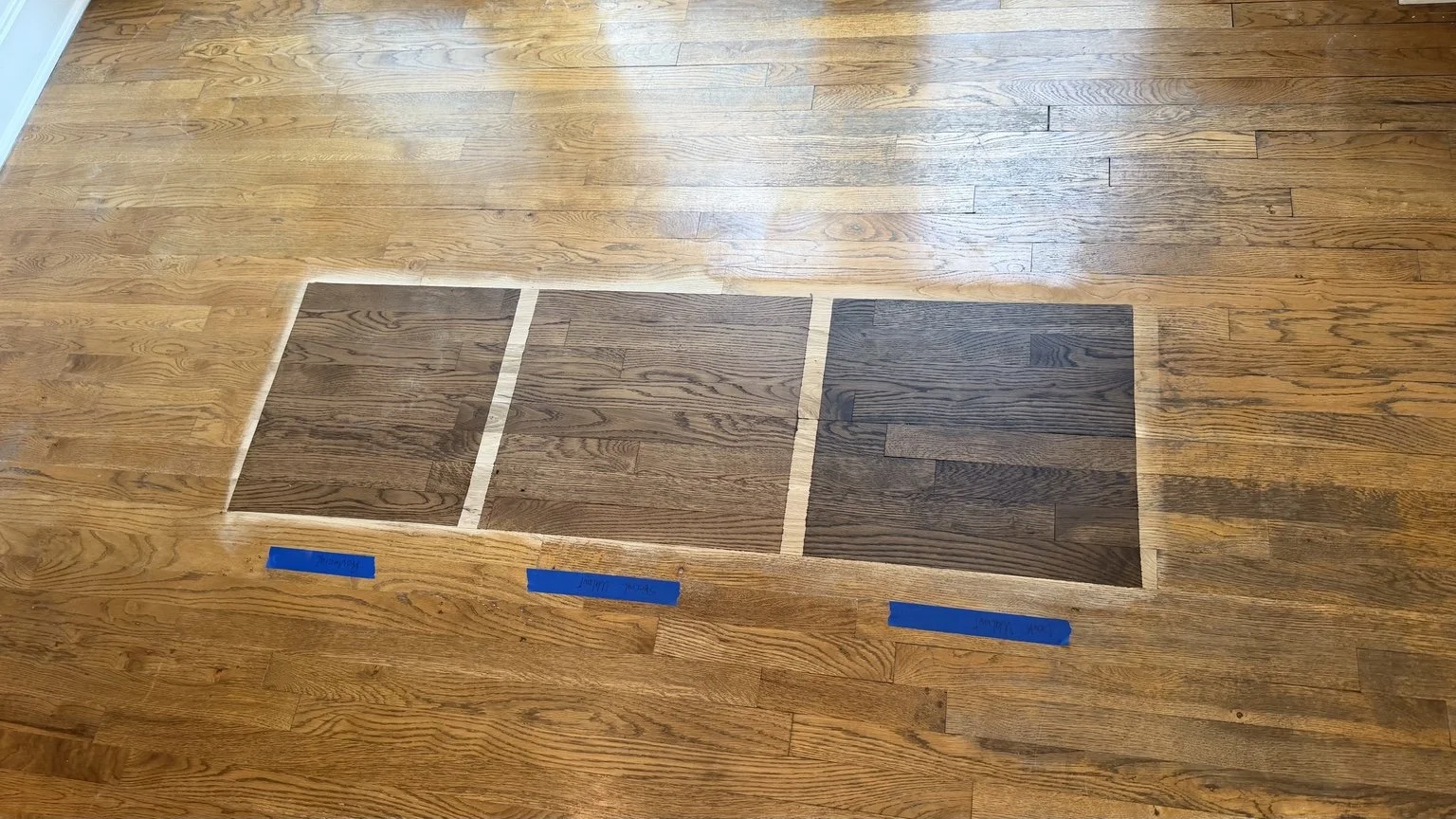
Ask to review representative options on the actual wood in your lighting before final color approval. The same stain can look different on another species or an older board.
Is water-based finish better than oil-based finish?
The right choice depends on appearance, the exact products and the return schedule. Waterborne systems often keep a clearer look; oil-modified finishes add warmth. Compare the whole finish system rather than assuming one category always lasts longer.
Should I choose matte, satin or gloss?
Choose the reflection you like in your room. Greater shine can make dust and wear more noticeable. A sample viewed in daylight and evening lighting is more useful than treating one sheen as the right answer for everyone.
Can new hardwood match the floor in the next room?
We evaluate the species, board dimensions, height and direction before proposing a connection. Lacing can blend new boards into the existing layout, but older wood and new wood may take color differently.
Should stairs, base shoe and floor vents be included?
Only if they are listed in the scope. Count stairs and landings separately, confirm trim work and discuss flush wood vents before sanding starts. These details are easier to plan before the finish is applied.
Living through the project
What affects the cost of hardwood refinishing?
Area is only part of it. Board repairs, stairs, trim, stain choices, finish products and moving responsibilities can change the price. Compare a written scope instead of applying one advertised rate to every room.
How long does refinishing take?
The room count, repairs, color approval and finish system determine the schedule. Ask for both the work dates and the restrictions after the final coat. Finishing the job and returning to normal use are different milestones.
Can we stay home while the floors are refinished?
Sometimes. You need usable exits and access to essential rooms without crossing the work area. Follow the selected products’ ventilation and occupancy instructions. Arrange another place to stay if the layout or finish requires it.
How much dust should I expect?
Dust-reduction equipment and protection help manage sanding dust, but no sanding job should be promised as dust-free. Confirm what will be covered, how work areas will be separated and what cleanup is included.
When can people, pets, furniture and rugs return?
Get separate return dates for each, based on the actual finish and site conditions. A floor ready for light foot traffic may not be ready for furniture or rugs. Do not use dry-to-the-touch as the deciding test.
Keeping the finish in good shape
What should I use to clean refinished hardwood?
Remove loose grit and use the cleaner approved for the finish. Avoid steam, excess water and unapproved shine-restoring products. Tell your contractor about past waxes or polishes before a future recoat.
When should I consider a maintenance coat?
Have the finish evaluated while wear is still in the coating, before bare wood appears. The right timing depends on traffic, care and compatibility, not a fixed number of years.
See the work behind the answers
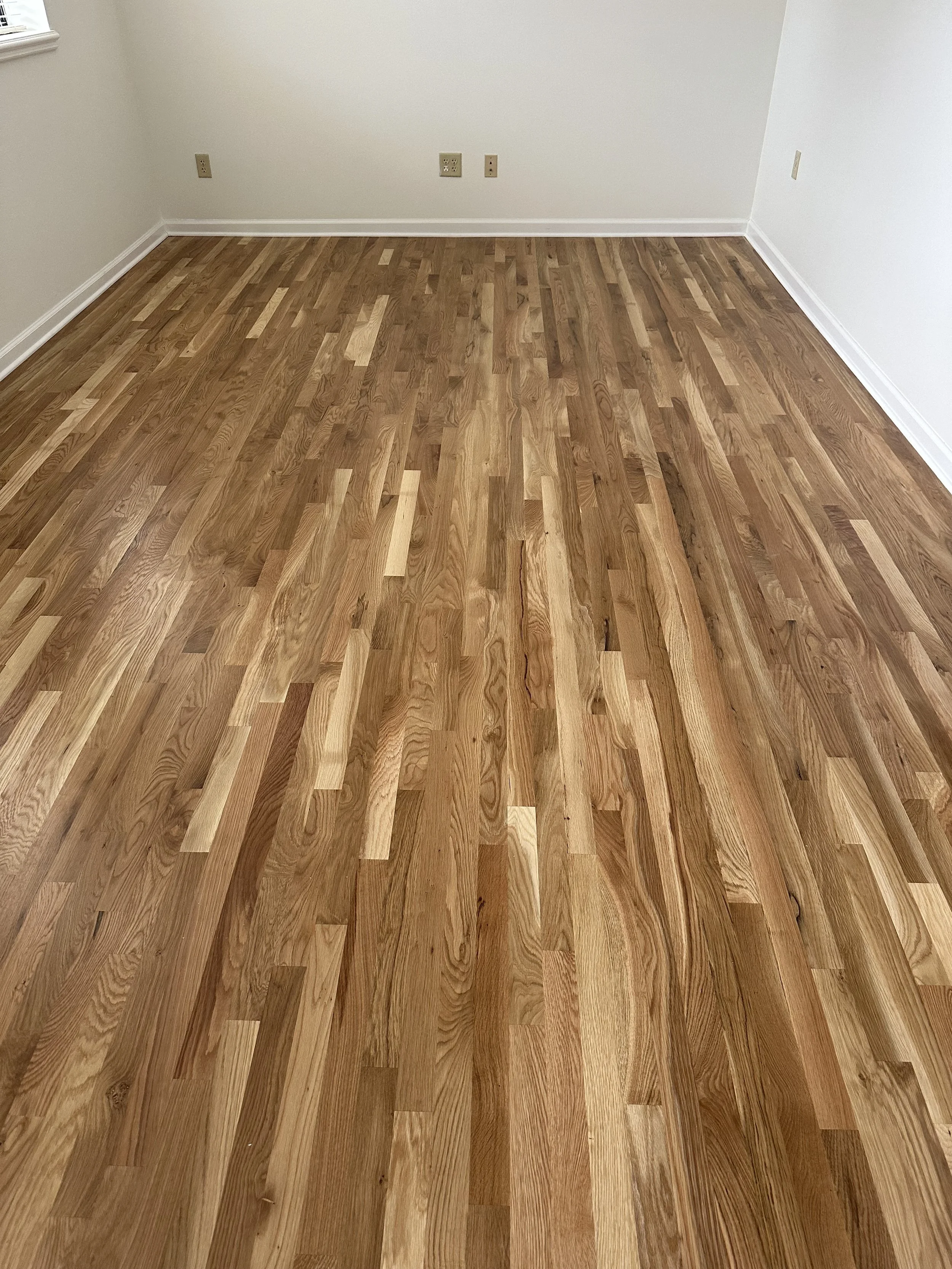
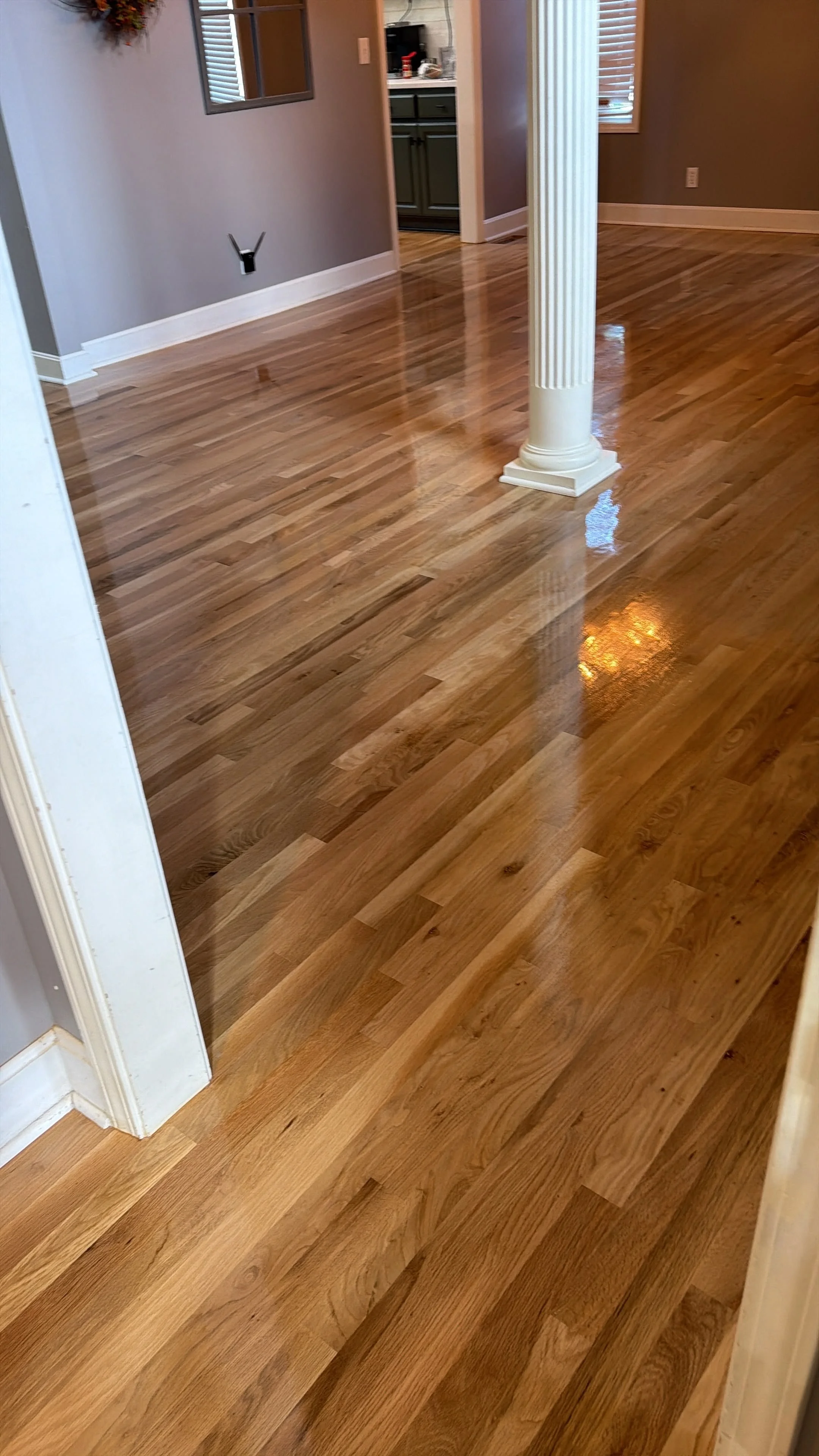
Restored floors, stain selection and new hardwood in Kansas City-area homes.
Let’s talk about your floor.
Share your city, the rooms involved and what you want to improve. A few photos are a good place to start.
Answers from Fortress Floors KC. For more detail, visit our Kansas City Flooring Guide. Product instructions and an on-site assessment determine the plan for your floor.